Ceasefire talks resume as negotiators arrive for a second round
Signal Bulletin report
Summer Training: Catching Up With NASA’s Astronaut Candidates
Did you spend part of your summer camping, hiking, at the pool, or in an aircraft? So did NASA’s 2025 Astronaut Candidate Class. The 10 candidates have been…
Author not supplied
· Published 14 Sep 2026, 15:31 · Updated 14 Sep 2026, 15:31
Credit: NASA · NASA material is generally not copyrighted; items carrying a third-party or copyright credit are excluded. The NASA logo and insignia are never reused.
NASA3 min readPreparations for Next Moonwalk Simulations Underway (and Underwater)
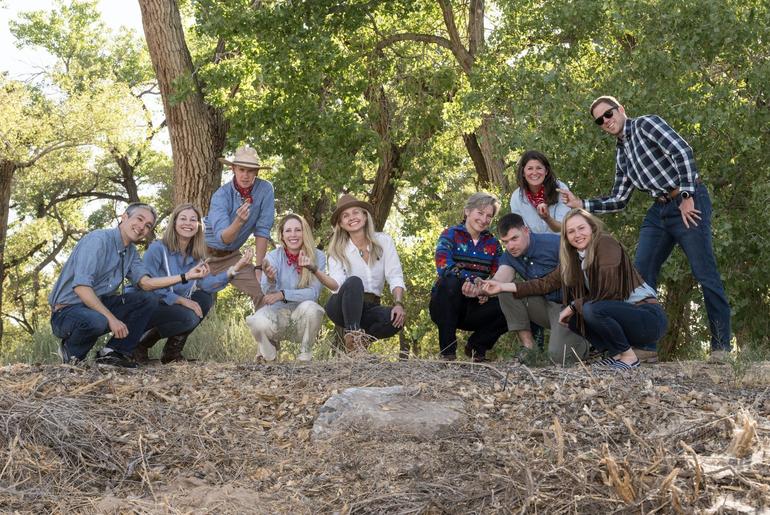
The members of NASA’s 2025 Astronaut Candidate Class pose with rock samples collected during their geology training at the Rio Grande del Norte National Monument, New Mexico, in May 2026. NASA/Helen Arase Vargas
Did you spend part of your summer camping, hiking, at the pool, or in an aircraft? So did NASA’s 2025 Astronaut Candidate Class.
The 10 candidates have been working their way through a comprehensive and rigorous training program since the agency introduced them to the public on Sept. 22, 2025, from NASA’s Johnson Space Center in Houston. They are approximately halfway through the nearly two-year training program, which will equip them for missions to low Earth orbit, the Moon, and ultimately, Mars.
Geology Studies
Since the astronaut candidates can one day be assigned to a future Artemis mission to the lunar surface, geology courses are an important part of their training. In May, candidates completed classroom trainings at Johnson before venturing to the Rio Grande del Norte National Monument in New Mexico for additional classroom instruction and training in the field. Several candidates also joined NASA astronauts and Artemis mission support teams for geology field training in Iceland in July. They practiced geologic observations, sampling with tools, navigation, and teamwork, all skills and processes that translate directly to Artemis lunar missions.
NASA astronaut candidates study rock samples during a geology classroom training at NASA’s Johnson Space Center in Houston.NASA/Helen Arase Vargas
NASA astronaut candidates Anna Menon, left, and Imelda Muller study a rock sample during a geology classroom training at NASA’s Johnson Space Center in Houston.
NASA astronaut candidates hiked through Rio Grande del Norte National Monument, New Mexico, during geology field training.NASA/Helen Arase Vargas
JAXA (Japan Aerospace Exploration Agency) astronaut Akihiko Hoshide and NASA astronaut candidates Cameron Jones and Yuri Kubo participated in geology field training in Iceland, alongside NASA astronauts, Artemis mission support teams, and geology instructors.NASA/James Blair
Flight Training
Whether learning to become a pilot or sharpening their existing piloting skills, astronaut candidates train in aircraft to build confidence, coordination, adaptability, and resilience in high-stakes environments. This summer, that training included flights on NASA’s WB-57s – a trio of long-range, high-altitude airplanes that have flown research missions since the 1960s. The class also began flying NASA’s T-38 supersonic jets.
NASA astronaut candidate Lauren Edgar prepares for flight training in one of NASA’s T-38 jets.
NASA astronaut candidate Rebecca Lawler, right, rides out to one of NASA’s WB-57 aircraft ahead of flight training at Ellington Field.NASA/Josh Valcarcel
NASA astronaut candidate Adam Fuhrmann completes preflight checks of a WB-57 aircraft at Ellington Field.NASA/Josh Valcarcel
NASA astronaut candidate Adam Furhmann sits inside the cockpit of a WB-57 aircraft as he prepares for flight training.NASA/Josh Valcarcel
Altitude Chamber Runs
Candidates have also spent time in one of Johnson’s altitude chambers as part of their flight training. These unique facilities allow NASA to simulate physical pressure levels ranging from those at sea level to near vacuum. After donning flight suits and helmets, candidates enter the chamber to familiarize themselves with the conditions they will face on high-altitude flights and in space, and to practice different protocols and interventions designed to keep them safe.
April 8, 2025NASA astronaut candidates Adam Fuhrmann and Rebecca Lawler prepare to conduct altitude chamber runs as part of their flight training.
NASA astronaut candidate Adam Fuhrmann sits inside the altitude chamber at NASA’s Sonny Carter Training Facility in Houston.NASA/James Blair
A NASA team member observes astronaut candidate Adam Fuhrmann as he completes an altitude chamber run.NASA/James Blair
Water Survival Training
Candidates continued survival training to prepare for the unlikely event of landing in remote environments after a mission. Water survival exercises in Johnson’s Neutral Buoyancy Laboratory, or NBL, simulate these scenarios while also building teamwork and decision-making skills.
Some components of astronaut candidates’ water survival training are completed during simulated storms inside of the Neutral Buoyancy Laboratory.NASA/Morgan Gridley
A NASA astronaut candidate practices being lifted out of the water during survival training in the Neutral Buoyancy Laboratory.NASA/Robert Markowitz
NASA astronaut candidate Rebecca Lawler floats in a raft during water survival training at the Neutral Buoyancy Laboratory.NASA/Robert Markowitz
On top of these exercises, candidates are completing intensive Russian language classes and cross-cultural training to prepare for missions spanning countries and continents. They are learning to operate spacecraft systems used in human spaceflight missions, conducting spacewalk training at the NBL, and training inside other mockups of space vehicles. They are also learning emergency procedures, maintenance, and repair of spacecraft.The class is on track to graduate in 2027, when they will join NASA’s active astronaut corps and await their first flight assignments. Whether they go on to contribute to research taking place aboard the International Space Station or venture to the Moon to prepare for future Mars missions, the graduates will have the operational expertise, scientific knowledge, and technical background necessary to advance NASA’s deep space exploration goals and sustain a long-term human presence beyond low Earth orbit.
About the AuthorLinda E. Grimm
Share
Details
Last Updated
Sep 10, 2026
Related TermsJohnson Space CenterCandidate AstronautsGeneral
Explore More
7 min read
From the Corps to the Cosmos, featuring Jaden Caradine
Article
6 days ago
2 min read
NASA Hosts Virtual Artemis Webinar for Blind, Low-Vision Community
Article
1 week ago
3 min read
NASA Welcomes Türkiye as Newest Artemis Accords Signatory
Article
2 weeks ago
Keep Exploring
Discover More Topics From NASA
Missions
Humans in Space
Climate Change
Solar System