Ceasefire talks resume as negotiators arrive for a second round
Signal Bulletin report
NASA Conducts RS-25 Engine Test in Support of Future Artemis…
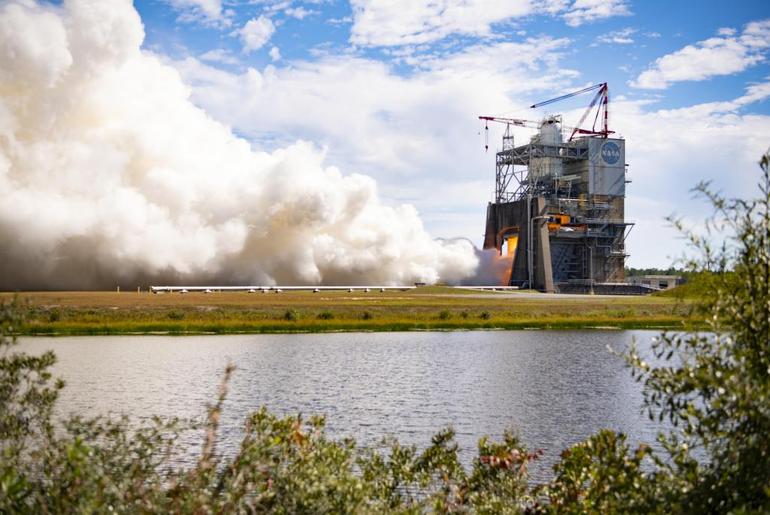
NASA tested RS-25 engine No. 10001 on Oct. 21 on the Fred Haise Test Stand at NASA’s Stennis Space Center near Bay St. Louis, Mississippi. Test teams fired…
Author not supplied
· Published 21 Oct 2026, 21:08 · Updated 21 Oct 2026, 21:08
Credit: NASA · NASA material is generally not copyrighted; items carrying a third-party or copyright credit are excluded. The NASA logo and insignia are never reused.
NASA2 min readPreparations for Next Moonwalk Simulations Underway (and Underwater)
NASA conducts a hot fire of RS-25 engine No. 10001 on the Fred Haise Test Stand at NASA’s Stennis Space Center near Bay St. Louis, Mississippi, on Oct. 21, 2026. NASA/Danny Nowlin
NASA conducts a hot fire of RS-25 engine No. 10001 on the Fred Haise Test Stand at NASA’s Stennis Space Center near Bay St. Louis, Mississippi, on Oct. 21, 2026. NASA/Danny Nowlin
NASA conducts a hot fire of RS-25 engine No. 10001 on the Fred Haise Test Stand at NASA’s Stennis Space Center near Bay St. Louis, Mississippi, on Oct. 21, 2026. NASA/Danny Nowlin
NASA tested RS-25 engine No. 10001 on Oct. 21 on the Fred Haise Test Stand at NASA’s Stennis Space Center near Bay St. Louis, Mississippi.
Test teams fired the developmental engine for almost eight-and-a-half minutes (500 seconds), the same amount of time RS-25 engines fire during launch of NASA’s SLS (Space Launch System) rocket.
During the test, operators also fired the engine up to the 111% power level, matching the thrust needed for new production engines to launch the SLS rocket and the Orion spacecraft to orbit.
The main objectives of the test were to acceptance test RS-25 flight components for future Artemis missions and validate the new thermal protection system, which protects the RS-25 engine nozzle from the thermal environment surrounding SLS during launch.
While this developmental engine will not be used in flight, the hot fire test provides NASA and NASA’s prime contractor L3Harris Technologies with the capability to capture critical data to improve engine performance and reliability.
Four RS-25 engines produce up to 2 million pounds of combined thrust to help launch the SLS rocket for each Artemis mission.
All RS-25 engines are tested and proven flightworthy at NASA Stennis prior to use. Tests are conducted by a team of operators from NASA, L3Harris, and Nova Space Solutions.
Learn More About Artemis