Ceasefire talks resume as negotiators arrive for a second round
Signal Bulletin report
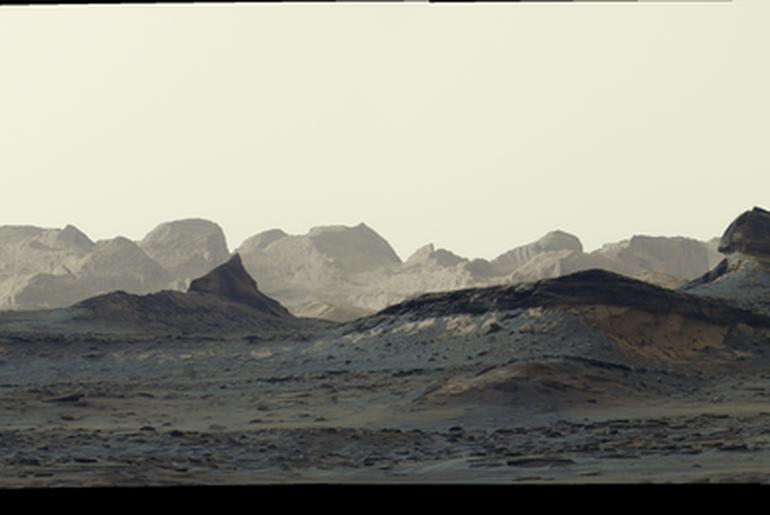
NASA’s Curiosity Captures Dawn Breaking on Wind-Carved Cliffs
Description NASA’s Curiosity Mars rover captured this panorama of sunrise illuminating distant, wind-carved features called yardangs on Aug. 11, 2026, the…
Author not supplied
· Published 07 Oct 2026, 17:54 · Updated 07 Oct 2026, 17:54
Credit: NASA · NASA material is generally not copyrighted; items carrying a third-party or copyright credit are excluded. The NASA logo and insignia are never reused.
NASA
2 Min Read
NASA’s Curiosity Captures Dawn Breaking on Wind-Carved Cliffs
PIA25629
Credits:
NASA/JPL-Caltech/MSSS
Photojournal Navigation
Science
Photojournal
NASA’s Curiosity Captures…
Photojournal Home
Photojournal Search
Latest Content
Galleries
Feedback
RSS
About
Downloads
NASA’s Curiosity Captures Dawn Breaking on Wind-Carved Cliffs
PNG (11.91 MB)
PIA25629 Figure A
PNG (2.70 MB)
Description
NASA’s Curiosity Mars rover captured this panorama of sunrise illuminating distant, wind-carved features called yardangs on Aug. 11, 2026, the 4,982nd Martian day, or sol, of the mission. Scientists are eager to learn more about how the yardang layer formed.
Figure A
Figure A is a crop zooming in on the distant yardangs.
Since 2014, Curiosity has been ascending 3-mile-tall (5-kilometer-tall) Mount Sharp, which is made up of a series of distinct layers that were deposited one on top of the other. In the area of the vast mountain’s shoulder where the rover is climbing, that stack of layers ends with the yardang layer. Before the yardang layer was laid down, Mount Sharp may have begun eroding, creating a gap in the otherwise continuous record of climate history that Curiosity has been reading from the layers. Scientists aren’t entirely sure how the layer formed; one theory is that it’s a pile of volcanic ash, similar to what’s seen along the Red Planet’s equator.
This panorama was captured by Curiosity’s Mastcam and is made up six individual images that were stitched together after being sent back to Earth. Unlike most of Curiosity’s Mastcam images, this one was processed without the usual white balancing, an artistic choice that preserves the early morning appearance.
Curiosity was built by NASA’s Jet Propulsion Laboratory, which is managed by Caltech in Pasadena, California. JPL leads the mission on behalf of NASA’s Science Mission Directorate in Washington as part of NASA’s Mars Exploration Program portfolio. Malin Space Science Systems in San Diego built and operates Mastcam.
To learn more about Curiosity, visit:
https://science.nasa.gov/mission/msl-curiosity/
Keep Exploring
Discover More Topics From Photojournal
Photojournal
Search Photojournal
Photojournal’s Latest Content
Feedback